
How Do Flexible LED Screens Work?
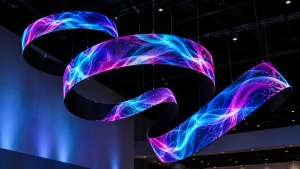
Flexible LED screens display video and graphics across a surface that can follow a planned curve or shape. Depending on the product, that might mean wrapping a display around a column, creating a curved video wall or hanging a lightweight LED curtain behind a stage.
The word flexible covers several types of display. Some use bendable modules, while others use cabinets or connected elements arranged to form a curve. How the screen takes shape depends on the system chosen for the installation.
How Does a Flexible LED Display Create an Image?
Like a flat LED screen, a flexible LED display uses many small light-emitting pixels to form a picture. Its modules receive image data from a controller, which tells each section what part of the video or graphic to show. Together, the sections appear as one display.
The difference is in how those sections are built and mounted. A flexible LED display screen can follow a specified shape while its mounting, cabling and control system support the complete installation. LEDsynergy describes its flexible screens as connected LED modules and offers both flexible video curtains and curved displays.
Can All Flexible LED Screens Bend in the Same Way?
No. A bendable LED module, a curved cabinet system and a video curtain have different structures and installation requirements. Some are designed to form a smooth curved surface. A curtain has spaces between its display elements, which can allow light, air and sound to pass through.
Each product also has limits on the shapes it can form. If a display needs to wrap tightly around a column, the required curve should be established before selecting the screen. LEDsynergy offers concave and convex formats for its flexible curtain screens, as well as curved and circular displays.
Is a Flexible LED Screen the Same as a Roll Up LED Screen?
Not necessarily. Someone searching for a roll up LED screen may mean a display that can be rolled for transport or storage. Many curved LED screens are installed in a fixed shape and are not designed to be rolled up after use.
If portability matters, ask specifically how the display is packed, moved and reinstalled. If the screen will stay in place, focus instead on the shape it needs to follow and how it will be maintained.
Where Can Curved LED Displays Be Used?
A curved LED display can turn a column, wall or architectural feature into an active display surface. Flexible screens can also work as stage backdrops, exhibition features and retail displays.
The location should guide the format. A stage curtain may benefit from a lightweight, partially transparent structure, while a display following a solid wall may need a different mounting system. Content should be designed for the finished shape so that important words and images remain easy to see. LEDsynergy lists stage, exhibition, retail and architectural uses for its flexible display range.
What Should You Check Before Choosing a Flexible Screen?
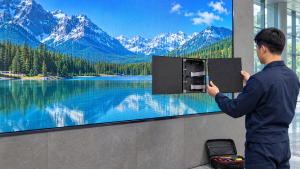
Start with the dimensions and shape you want to cover. Then consider the closest viewing distance, whether the display will be indoors or outdoors, how it will be supported and how technicians will access it for repairs.
Outdoor installations need a product specified for exposure to the weather. Pixel pitch also matters: people standing close to a column display will view it differently from an audience watching a stage backdrop across a venue.
LEDsynergy supplies flexible video curtains and curved displays. If you have a location in mind and of what you want the screen to show contact the team today.
I would recommend LED Synergy to anyone considering purchasing an LED sign. We have had so many compliments since it was installed and it has been a valuable asset.
Tom Hughes
OSI Food Solutions