
How Do 3D LED Screens Work?
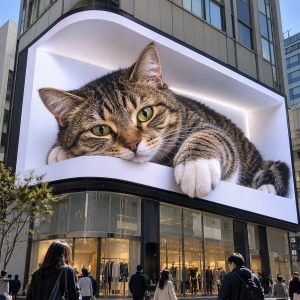
A giant creature appearing to lean out of a building or a product seeming to float beyond the screen can look like a three-dimensional image. In many cases, though, the display is showing a carefully designed two-dimensional animation. The apparent depth comes from the way the content is drawn for the screen and the position from which people view it. No special glasses are needed for this type of effect.
How Do 3D LED Displays Create the Illusion of Depth?
The most convincing installations bring together perspective, moving content and the physical shape of the screen. The LED display provides the image; the design of the animation makes objects appear to have depth or extend beyond its edges.
What Role Does Perspective Play on a 3D Screen?
An artist designs the scene around an intended viewing position. Lines, shadows and changes in scale help the eye interpret a flat picture as a space with depth. An object may appear smaller as it moves “back” into that space and larger as it seems to approach the viewer.
This technique is often called anamorphic content. From the intended position, the illusion can be striking. Move well away from that position and the image may look stretched or lose some of its depth. This is why a 3D LED animation needs to be planned around where people will actually stand, rather than created for the screen dimensions alone. Research into anamorphic images likewise describes how the projected view depends on the observer’s position.
Does a 3D LED Screen Need to Be Curved or Wrapped Around a Corner?
No. A flat LED screen can show content with a sense of depth. A corner or curved display, however, gives designers an additional feature to work with. The animation can use the apparent edges of a building or screen to make an object look as though it sits inside a space or moves out towards the viewer.
For example, LEDsynergy’s Synergy PRECISION outdoor cabinet range supports both right-angle and curved joints. That allows a display to wrap around a building corner, subject to the requirements of the site.
Is a 3D LED Display Different from a Conventional LED Display?
For the building-scale effects discussed here, the underlying display does not necessarily produce a stereoscopic image. It is an LED screen showing video made for its shape and intended sightline. The content creates the illusion, while the screen’s resolution, brightness and layout affect how clearly people can see it.
That distinction matters when planning a project. Buying a screen described as “3D” will not produce the effect on its own. The physical installation and the creative content must be designed together.
How Is 3D LED Animation Made for a Specific Site?
The process starts with the proposed location. Designers need the screen’s dimensions and shape, the likely viewing area and an understanding of what surrounds the display. They can then build the scene to suit that particular viewpoint.
Before installation, it is sensible to review the animation against a model of the screen and its setting. An effect that works in a flat preview may appear different across a corner or from street level. Once installed, the content may need adjustment to achieve the intended look from the main viewing area.
Where Can Businesses Use 3D LED Screens?
These displays can work well on building corners, retail frontages and entertainment venues where people have a reasonably clear view of the screen. They can also be used for an exhibition feature, provided the layout gives visitors enough space to see the effect from its intended position.
If you have a site in mind, contact LEDsynergy with photographs and an indication of where viewers would stand. The team can discuss the screen layout and practical display requirements before the animation is developed.
I would recommend LED Synergy to anyone considering purchasing an LED sign. We have had so many compliments since it was installed and it has been a valuable asset.
Tom Hughes
OSI Food Solutions