
LED Video Screen Price 2026: Complete Buying Guide
Table of Contents
- LED Video Screen Price 2026: What You Need to Know
- Key Factors Affecting LED Screen Price
- Indoor vs Outdoor LED Display Cost Breakdown
- COB LED Display Cost 2026: Emerging Technology Premium
- LED Video Screen Installation Cost and Labor
- Rental LED Screen Price 2026: Buy vs Rent Analysis
- Hidden Costs and Long-Term Maintenance Expenses
- Retail and Commercial Application Pricing
Last Updated: July 15, 2026
LED Video Screen Price 2026: What You Need to Know
Understanding led video screen price 2026 requires looking beyond the sticker cost. A display might cost £500 per square meter, but add installation, structural engineering, permits, and maintenance, and the true cost is entirely different. This guide shows you how to decode pricing across applications, understand what drives costs, and calculate total cost of ownership before committing.
The real complexity comes from dozens of interconnected variables: pixel pitch, display technology, raw materials, installation requirements, and your specific application all influence the final bill.
Price Variability by Application
LED video screen costs swing wildly depending on where and how you’ll use them. Indoor retail displays typically start lower because they operate in controlled environments. A fine-pitch indoor display for a boutique might run £800-1,200 per square meter, including basic installation. Outdoor billboards demand strong construction to withstand temperature extremes, moisture, and wind stress, typically costing £1,500-2,500 per square meter.
Rental screens use modular cabinets for repeated setup and teardown. A 10-square-meter rental screen might cost £500-1,500 per day. Sports venues and large-format installations push costs higher, often exceeding £3,000 per square meter due to high refresh rates, redundant power systems, and professional installation requirements.
Key Factors Affecting LED Screen Price
Seven core factors determine whether you’ll pay £400 or £4,000 per square meter.
Pixel Pitch and Resolution Impact
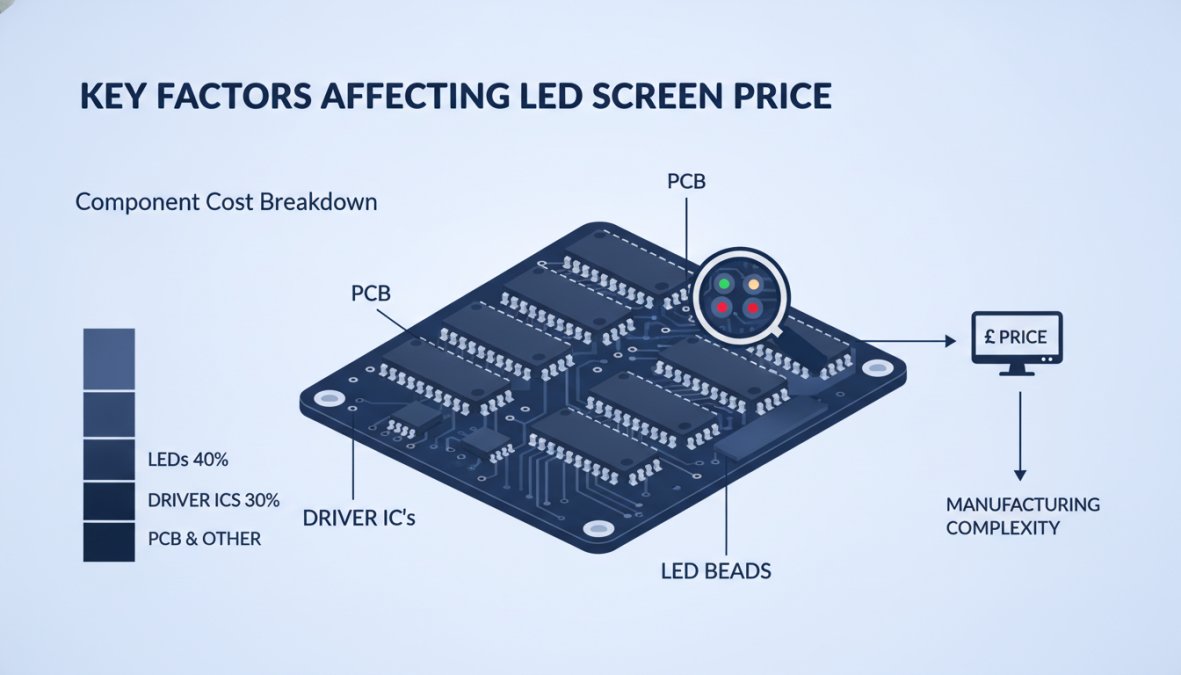
Pixel pitch, the distance between LED centers, is the single biggest cost driver. Smaller pixel pitch means more LEDs packed into the same space, requiring more components and precision manufacturing.
A 10mm pixel pitch display costs roughly 40-50% less than a 4mm pitch display. Finer pitches demand higher-grade PCBs and more sophisticated driver ICs. At 2.5mm or below, costs jump significantly because COB or advanced SMD techniques become necessary.
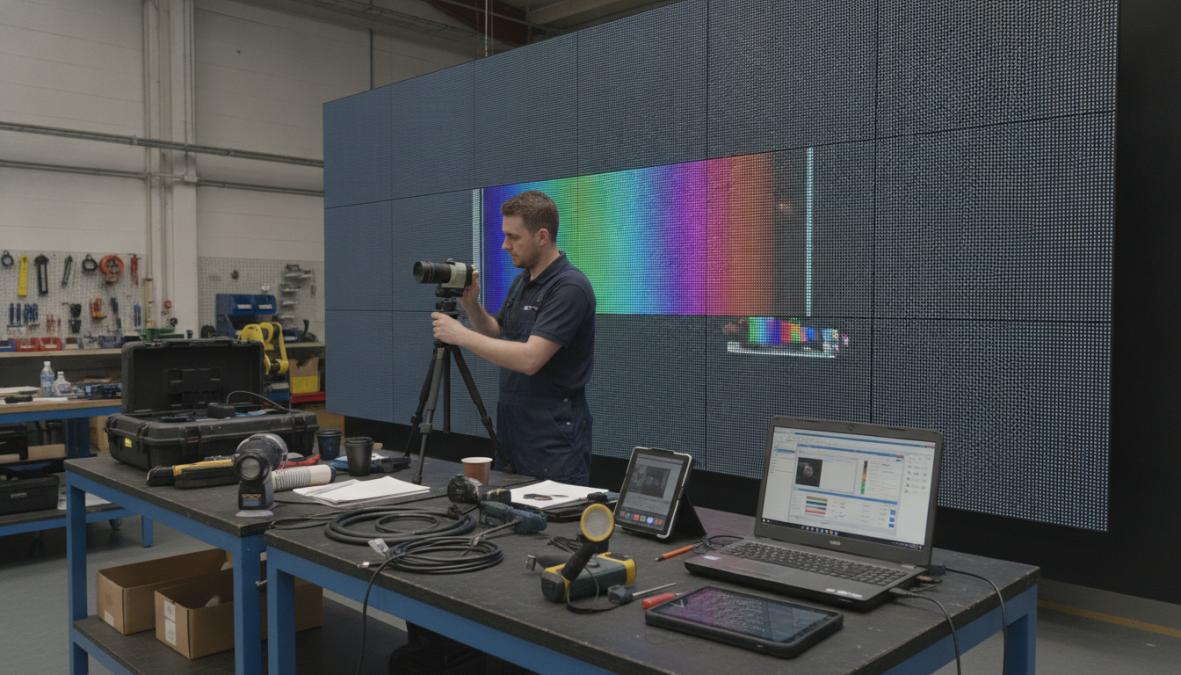
Viewing distance determines minimum acceptable pixel pitch. A display viewed from 10 meters away doesn’t need 2mm pitch; 6-8mm performs fine and saves 30-40% in cost. A display viewed from 2 meters needs 2-3mm pitch to avoid visible pixelation.
Display Technology: SMD vs COB
SMD (Surface Mounted Device) displays mount individual LED packages onto a PCB. This traditional approach remains most common and cheaper to manufacture. SMD displays are modular and easier to repair.
COB (Chip on Board) displays solder LED chips directly onto the PCB, allowing extremely small pixel pitches (under 1.5mm) and superior brightness density. COB excels for high-resolution indoor applications requiring close viewing. The trade-off: COB displays are harder to repair and more expensive to manufacture.
A 3mm SMD display costs roughly £1,200-1,500 per square meter. A 2mm COB display costs £2,000-2,800 per square meter. For most outdoor and mid-range indoor applications, SMD wins on value. For luxury retail or close-viewing applications, COB justifies the premium.
Raw Materials and Component Costs
LED display costs track closely with raw material inflation. Driver ICs, PCBs, LED chips, and aluminum frames all fluctuate with commodity prices. In 2026, raw material costs remain elevated compared to pre-2023 levels, though supply chains have stabilized.
Driver ICs are a significant cost component for fine-pitch displays. Chips from premium suppliers cost more but offer better color consistency and longer lifespan. Monitor raw material trends when planning your budget; displays purchased during supply crunches cost 15-25% more than those purchased during normalized periods.
Indoor vs Outdoor LED Display Cost Breakdown
The environment where your display operates determines hardware specifications and cost.
Price Per Square Meter Comparison
Indoor displays operate in climate-controlled environments. A standard indoor SMD display at 4mm pixel pitch costs £600-900 per square meter. Installation is straightforward: mount to a wall, run power and data cables, and commission.
Outdoor displays face wind, rain, temperature swings, UV exposure, and dust. An outdoor SMD display at 6mm pitch costs £1,200-1,800 per square meter; a 4mm outdoor display costs £1,800-2,500 per square meter. Outdoor cabinets are heavier and more rigid, use higher-grade seals, and require advanced cooling. Brightness must be higher to compete with daylight, outdoor displays typically run 3,000-5,000 nits versus 800-1,500 nits indoors.
Installation labor also differs. An indoor display might take 2-3 days for two technicians. An outdoor display often requires structural engineers to assess mounting points and wind loading, adding weeks and thousands of pounds.
Environmental Protection and IP Ratings
IP ratings quantify how well a display resists dust and water. Outdoor displays typically need IP65 minimum (dust-tight and water-jet resistant). Achieving IP65 requires sealed cabinet seals and drainage systems that add cost and weight. IP67 displays cost 20-30% more than IP65 equivalents.
Indoor displays in dry environments can use IP43 or IP40, reducing cost and weight. Brightness also correlates with cost; a 1,000-nit indoor display costs less than a 2,000-nit display because brightness requires more power and better thermal management.
COB LED Display Cost 2026: Emerging Technology Premium
COB technology enables pixel pitches below 1.5mm, delivering cinema-quality resolution on displays under 3 meters. A 1.2mm COB display costs £2,800-3,500 per square meter; a 1.0mm COB display exceeds £4,000 per square meter.
COB manufacturing requires direct chip-to-board soldering with micron-level precision. Each defect wastes an entire module. Repair is difficult, and testing adds labor costs. The payoff is superior visual quality with no visible pixels at close viewing distances.
COB technology is maturing. Production volumes are increasing, and prices are declining. By 2027-2028, expect COB prices to drop 15-25% as manufacturing scales.
LED Video Screen Installation Cost and Labor
Hardware cost is only half the equation. Installation, structural engineering, permits, and commissioning often equal or exceed the display cost.
Turn-Key Packages vs Custom Builds
Turn-key packages bundle hardware, installation, and commissioning into a single price. The supplier handles site assessment, structural design, installation, testing, and training. Turn-key projects are predictable and typically complete on schedule, but cost 15-25% more than buying hardware separately.
Custom builds give you control over component selection and installation approach. This can save money if you have in-house expertise and existing installer relationships, but carries risk if integration issues arise.
For most organizations, turn-key makes sense. The premium buys predictability and reduces project risk.
Mounting Hardware and Structural Engineering
Structural engineering ensures the display won’t fall and won’t damage the building. Indoor wall mounts typically cost £500-2,000; outdoor pole mounts cost £2,000-5,000 plus £1,000-3,000 for foundation work.
Structural engineers charge £1,500-4,000 to assess the mounting location and certify the installation. Electrical work adds £1,000-5,000 depending on distance and existing infrastructure. Network cabling costs an additional £500-2,000.
For a 5-square-meter outdoor display, expect installation costs (labor, engineering, electrical, mounting) to range from £5,000-15,000, often 40-60% of total project cost.
Rental LED Screen Price 2026: Buy vs Rent Analysis
Renting makes sense for temporary events, trade shows, or short-term installations. A small rental screen (2-4 square meters, 5mm pitch) costs £300-800 per day. A medium screen (6-10 square meters) costs £800-1,500 per day. Large rental screens (15+ square meters) cost £1,500-3,000 per day, typically including delivery, setup, basic support, and teardown.
The break-even point depends on usage frequency. If you need the display for 100+ days per year, buying is cheaper. If you need it for fewer than 30 days per year, renting is more economical.
Total Cost of Ownership (TCO) Calculator
|
Cost Component |
Permanent Display |
Rental Display |
|---|---|---|
|
Hardware (5 sq m) |
£5,000-7,500 |
£0 |
|
Installation |
£5,000-10,000 |
£500-1,000 per event |
|
Annual maintenance |
£800-1,500 |
Included in rental |
|
Annual energy (5 years) |
£2,000-4,000 |
£0 |
|
Repairs and replacement parts |
£1,000-2,000 |
Included in rental |
|
5-Year Total (20 events/year) |
£20,800-32,500 |
£30,000-40,000 |
|
5-Year Total (50 events/year) |
£20,800-32,500 |
£75,000-100,000 |
If you use the display more than 30-40 times per year, buying is cheaper over 5 years.
Used and Refurbished Market Options
Used displays are available at 40-60% of new prices but carry risk regarding installation history and remaining lifespan. Refurbished displays (professionally inspected, repaired, and resealed) cost 50-70% of new prices and typically offer a 1-2 year warranty.
For cost-conscious buyers, refurbished displays from reputable vendors offer good value. For mission-critical applications, buying new ensures maximum lifespan and reduces failure risk.
Hidden Costs and Long-Term Maintenance Expenses
Over a 5-7 year lifespan, ongoing costs often exceed the initial hardware investment.
Energy Efficiency and Power Consumption ROI
A 5-square-meter indoor display running 8 hours daily uses roughly 5,000-9,000 kWh annually. At £0.28 per kWh, annual energy cost runs £1,400-2,500. Outdoor displays consume more, using 15,000-22,000 kWh annually and costing £4,200-6,200.
Choosing efficient displays saves money over time. A display with 85% power efficiency costs 10-15% less to operate than one with 75% efficiency. Over 5 years, this difference compounds to £1,000-2,000 in energy savings.
Displays manufactured in 2025-2026 consume 20-30% less power than equivalent displays from 2020-2021. If your timeline permits upgrading to newer technology, energy savings often justify the hardware cost difference within 3-4 years.
Warranty, Support, and Permitting Fees
Standard warranties cover 3 years of defects. Extended warranties (5-7 years) cost 10-15% more. For displays in harsh environments or running 24/7, extended warranty is worth the premium.
Basic support (email and phone assistance) costs £500-1,000 annually. Premium support (on-site technician within 24 hours) costs £2,000-4,000 annually. For mission-critical displays, premium support prevents costly downtime.
Permits and regulatory compliance add unexpected costs. Outdoor displays often require building permits (£500-2,000), electrical inspections (£300-800), and sometimes environmental assessments. Large displays near airports may require FAA approval (£1,000-5,000).
Retail and Commercial Application Pricing
Point-of-sale displays (small screens at checkout counters) use 1.5-2.5mm pixel pitch for close viewing, costing £1,500-2,500 per square meter. A typical POS display is 0.5-1 square meter, totaling £750-2,500 plus installation.
Window displays (viewed from outside) use 4-6mm pitch and cost £900-1,500 per square meter. A typical window display is 2-4 square meters, totaling £1,800-6,000 plus installation.
Interior wall displays use 6-10mm pitch and cost £600-1,200 per square meter. A typical interior display is 3-5 square meters, totaling £1,800-6,000 plus installation.
Outdoor storefront displays use 6-8mm pitch and cost £1,200-2,000 per square meter. These are often 4-8 square meters, totaling £4,800-16,000 plus installation and structural work.
Commercial applications demand higher brightness and color accuracy, costing 20-40% more than equivalent retail displays.
LED display pricing in 2026 remains complex because it reflects dozens of interconnected variables. The headline price per square meter tells only part of the story. Installation, structural engineering, permits, energy consumption, and maintenance often equal or exceed hardware cost. At LEDsynergy, we provide transparent pricing that includes all costs upfront, professional installation teams, and ongoing support to maximize your display’s lifespan and performance.
Frequently Asked Questions
What factors influence the price of an LED video screen in 2026?
LED video screen price depends on multiple variables: pixel pitch (finer pitch costs more), resolution quality, display technology (SMD vs COB), raw material costs, brightness (nits), IP rating for environmental protection, cabinet size, refresh rate, and installation complexity. Indoor displays typically cost less than outdoor billboards due to durability requirements. Custom configurations and turn-key packages also affect final pricing. Consult manufacturers like LEDsynergy for quotes based on your specific requirements.
How much does an LED video screen cost per square meter in 2026?
Pricing per square meter varies significantly based on specifications. Fine-pitch indoor displays command premium rates, while standard outdoor billboard displays cost less per m². Factors include pixel pitch resolution, brightness levels, and modular design. Rather than estimate, contact suppliers directly for current pricing, as raw material inflation and supply chains affect costs. LEDsynergy provides bespoke quotes tailored to your exact m² requirements and technical specifications.
Is it cheaper to rent or buy an LED video screen in 2026?
Rental vs purchase depends on your usage duration and Total Cost of Ownership (TCO). Short-term events (weeks/months) often favour rental; long-term installations (2+ years) typically favour purchase. Rental includes maintenance and support but lacks ownership equity. Purchase requires upfront capital, installation labour, permitting fees, and ongoing maintenance costs. Calculate your TCO by comparing rental monthly fees against purchase price, installation costs, energy consumption, and warranty periods to determine the best financial choice.
What are the hidden costs associated with LED video screen projects?
Beyond hardware, budget for: professional installation labour, mounting hardware, structural engineering assessments, electrical work, permitting and regulatory compliance, video wall controller systems, content creation software, ongoing maintenance and LED bead replacements, power consumption costs, warranty extensions, and technical support. These can add 30-50% to initial purchase price. Energy efficiency ratings impact long-term operational expenses. Always request detailed quotes that itemize all costs from installation to first-year maintenance.
How do pixel pitch and resolution affect LED video screen prices?
Pixel pitch (distance between LED beads) directly impacts cost: finer pitch (smaller gaps) requires more LEDs per square meter, increasing price significantly. Higher resolution displays demand more driver ICs and complex PCB designs. Fine-pitch indoor displays (under 2mm) cost substantially more than coarse-pitch outdoor displays (10mm+). Resolution also affects visual fidelity and viewing distance suitability. Specify your viewing distance and application to determine optimal pixel pitch, balancing cost against image quality requirements for your commercial or retail use case.
This article was written using GrandRanker
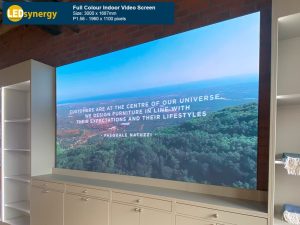
I would recommend LED Synergy to anyone considering purchasing an LED sign. We have had so many compliments since it was installed and it has been a valuable asset.
Tom Hughes
OSI Food Solutions