

LED Technology Explained How red, green and blue light combine to create images on LED screens
LED technology refers to the use of light-emitting diodes as individual, self-emissive pixels to generate images. Unlike LCD displays, which rely on a backlight, LED screens produce light directly at each pixel, enabling significantly higher brightness, contrast and scalability. This is the fundamental reason LED displays dominate large-format and outdoor environments.
What Is LED Technology?
LED technology refers to the use of light-emitting diodes as individual, self-emissive pixels to generate images. Unlike LCD displays, which rely on a backlight, LED screens produce light directly at each pixel, enabling significantly higher brightness, contrast and scalability.
This is the fundamental reason LED displays dominate large-format and outdoor environments.
How LED Screens Work
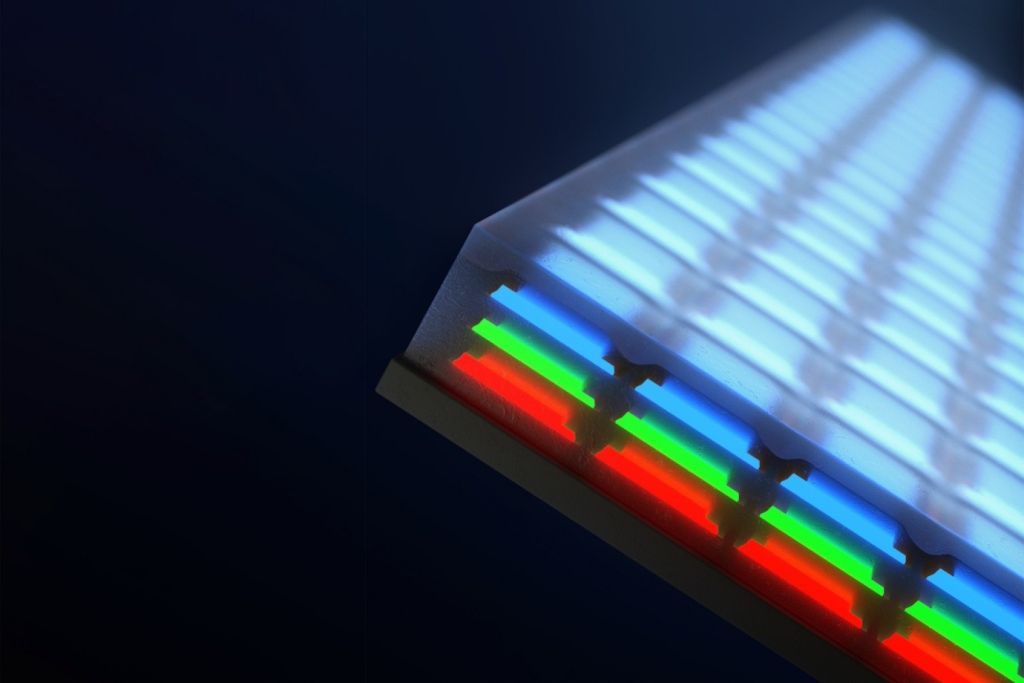
LED displays use clusters of red, green and blue diodes arranged into pixels. Each diode emits light when an electrical current passes through a semiconductor material.
Because each pixel generates its own light and can be controlled independently, LED screens achieve high brightness, strong contrast and seamless panel integration without visible bezels.
How LEDs Produce Light and Colour
An LED produces light through an electronic process within a semiconductor material. Different materials emit different colours of light.
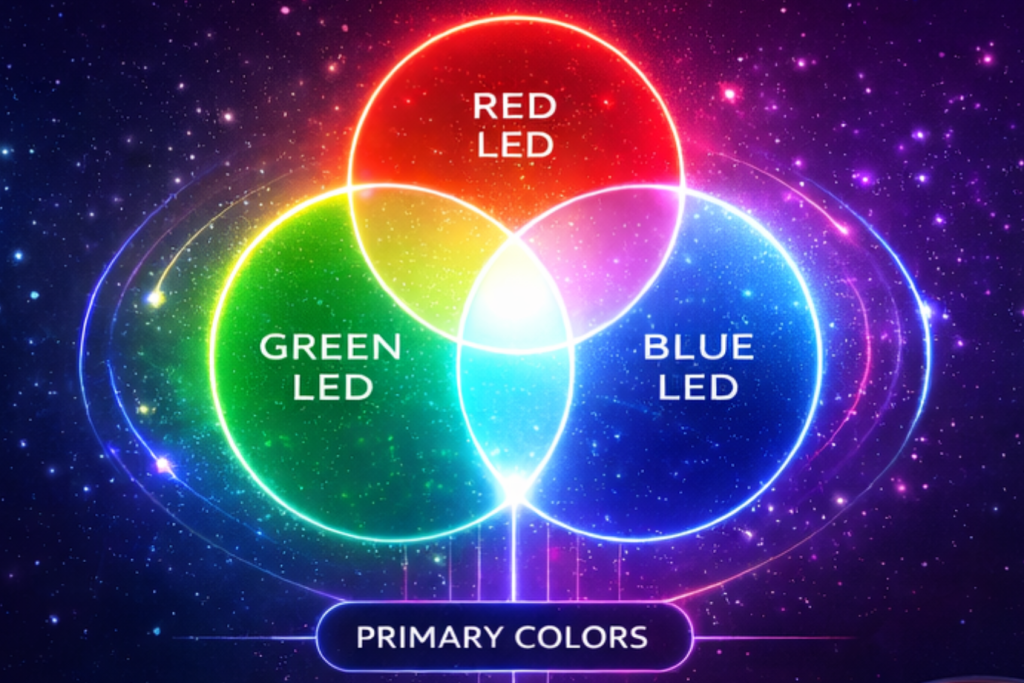
In display applications, LEDs use three primary colours:
- Red
- Green
- Blue
By adjusting the intensity of each colour, LED screens can reproduce a full range of colours and gradients.
How RGB Colour Mixing Creates Images
Each pixel contains red, green and blue light sources, which are controlled independently.
For example:
- Red + green = yellow
- Red + blue = magenta
- Red + green + blue = white
Accurate colour reproduction depends on precise electronic control, which allows LED displays to deliver smooth motion and consistent image quality across large surfaces.
Types of LED Technology
Different LED technologies are designed to balance resolution, brightness, durability and viewing distance. No single format is suitable for every application, which is why multiple LED types exist within modern display systems.
SMD (Surface-Mounted Device) LEDs
SMD LEDs are the standard for modern displays, combining red, green and blue diodes into a single compact unit. This enables high resolution, smooth colour blending and close viewing distances, making them ideal for indoor applications.
For a more detailed explanation, see SMD LEDs explained.
DIP (Dual In-line Package) LEDs
DIP LEDs use separate diodes mounted through the display surface. They offer higher brightness and durability, making them well suited to outdoor environments, but with lower resolution compared to SMD technology.
For a more detailed explanation, see DIP LEDs explained.
COB (Chip-on-Board) LEDs
COB LEDs integrate multiple LED chips directly onto the display surface, creating a more uniform and durable light output. They are typically used in high-end indoor environments where close viewing distances and surface protection are important.
Brightness and Image Control
One of the key advantages of LED technology is brightness control. Each LED’s output can be adjusted independently, allowing:
- High peak brightness for daylight visibility
- Lower brightness for indoor comfort
- Smooth transitions between light and dark areas
This level of control also improves contrast and ensures content remains legible across a wide range of environments.
Where LED Technology Performs Best
LED technology is particularly effective in:
- Indoor feature walls and atriums
- Outdoor signage and billboards
- Retail and experiential installations
- Corporate lobbies and broadcast environments
Its modular design allows screens to be built at almost any size or shape without visible joins.
LED Technology vs Other Display Technologies
LED screens differ from LCD and OLED displays in how they generate light.
- LED screens produce light at each pixel, enabling high brightness and seamless panels
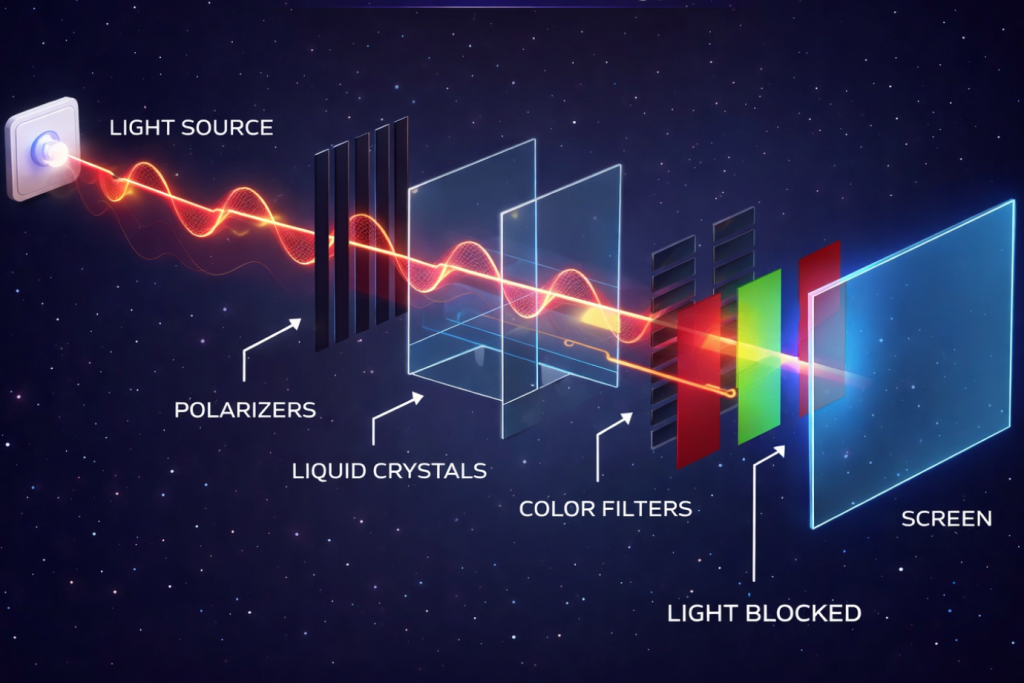
- LCD screens rely on a backlight, limiting brightness and creating visible joins
- OLED screens are self-emissive but are typically limited in size and brightness for large-scale applications
Common Misunderstandings About LED Technology
“LED screens are the same as LED TVs”
Not quite. Many consumer TVs are LCD panels with LED backlights. True LED screens use LEDs as the actual image-forming pixels.
“Higher brightness always means better quality”
Brightness alone does not guarantee good image quality. Colour accuracy, calibration and pixel pitch are equally important.
Why LED Technology Matters
Understanding LED technology helps explain:
- Why pixel pitch affects viewing distance
- Why calibration is essential for uniform images
- Why LED screens cost more than LCD video walls
- Why LED is often the only viable option for large or outdoor displays
It also helps buyers choose the right solution rather than simply the brightest or most expensive one.